

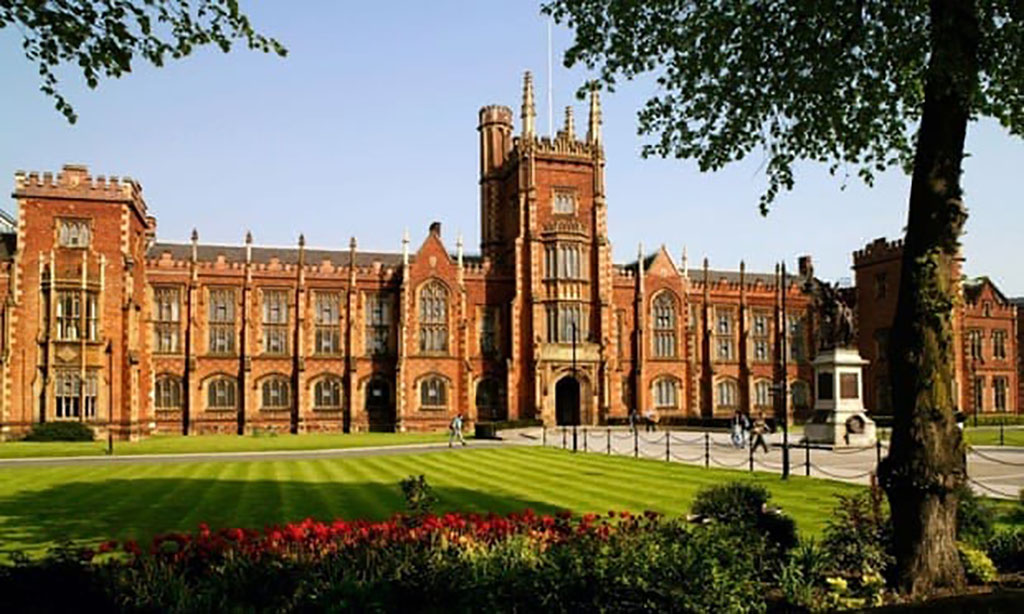
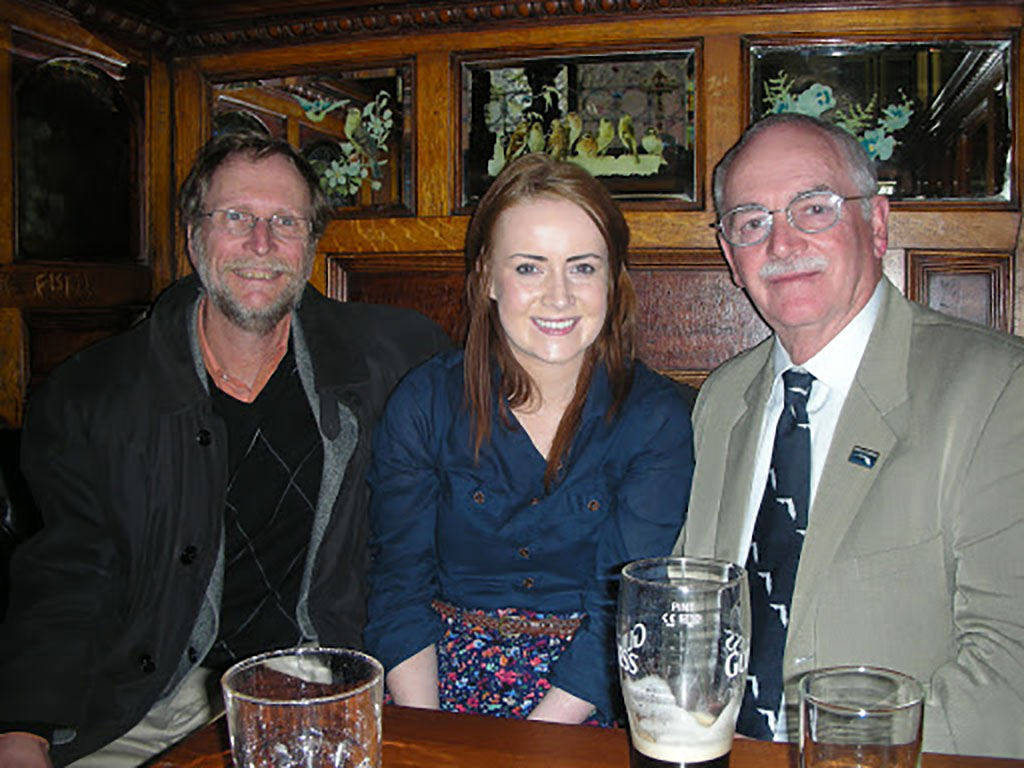
In 2012, while working with Space Florida, I received an invitation from Queen’s University Belfast to present a commercial space briefing to a group of science and medical students. Also accompanying me was Dr. Gary Stutte, a renowned, Florida-based space biologist. The invitation was a great honor from such a prestigious university. Founded way back in 1845, over the years many eminent and perhaps not so eminent persons have walked its corridors . That invitation came through a Kennedy Space Center intern, Dr. Theresa White, from Northern Ireland. In 2011, Theresa spent six months interning with a dear friend of ours Dr. Skip Beeler, at Kennedy Space Center. Following our initial meeting, Maureen and I became close friends with Theresa, and she regularly had dinner at our home in Cocoa Beach.
Initially I was most reluctant to go to Belfast. That city still harbored bad memories for me. In 1969, the Uptown Band musical equipment had been stolen there, never recovered. That single action had changed the course of my life and now – decades later, I was returning to the scene of the crime. However, in March 2012, there were more fearful thoughts on my mind as I made my way north on the Dublin to Belfast train. A mere distance of approximately one hundred miles from Dublin, it is often said that one must turn one’s clock back three hundred years when entering Northern Ireland. To quote the immortal words of U.S. negotiator Senator George Mitchell whose efforts culminated in the signing of the historic Good Friday Accords, Northern Ireland’s mantra might well be; “To hell with the future, let’s get on with the past”.
February 15th 1971 was a big day in Ireland, it was christened Decimal Day. The United Kingdom and the Republic of Ireland finally decided to move out of the middle ages, from pounds, shillings and pence, to the more manageable metric currency. Months prior and following the decimal transformation, there was a fever in Dublin and throughout the republic for methodologies that would allow business to quickly convert the ‘old’ currency to the ‘new’. Hence – calculators became the rage! Seizing the financial opportunity, I took up a temporary position with a small computer company whose headquarters were in Belfast. Called Davenport Equipment, essentially I was the Dublin salesman. My products were the Casio range of computers. Our largest competitor at the time were the Anita products. As a salesman, I managed to eke out a more than handsome paycheck each week due my good sales records.
On September 1, 1971, I attended a Davenport Equipment staff meeting in Great Victoria Street, Belfast. All staff were present and apart from sales training and equipment repair workshops, I was also looking forward to a soiree later that evening in one of the local pubs.
Entering the premises, I knew instantly that I was in a republican stronghold. The walls of the bar were festooned with the Irish tricolour. Perhaps it was the strong ale or the loud karaoke, but I was encouraged to go on stage and sing. Avoiding controversy, I sang a ballad that had been a recent enormous hit from Elvis Presley – ‘The Wonder of You’. The audience screamed in mock appreciation, clapped loudly and shouted for more. However, I knew that it was time for me to depart and catch the 7PM train back to Dublin.
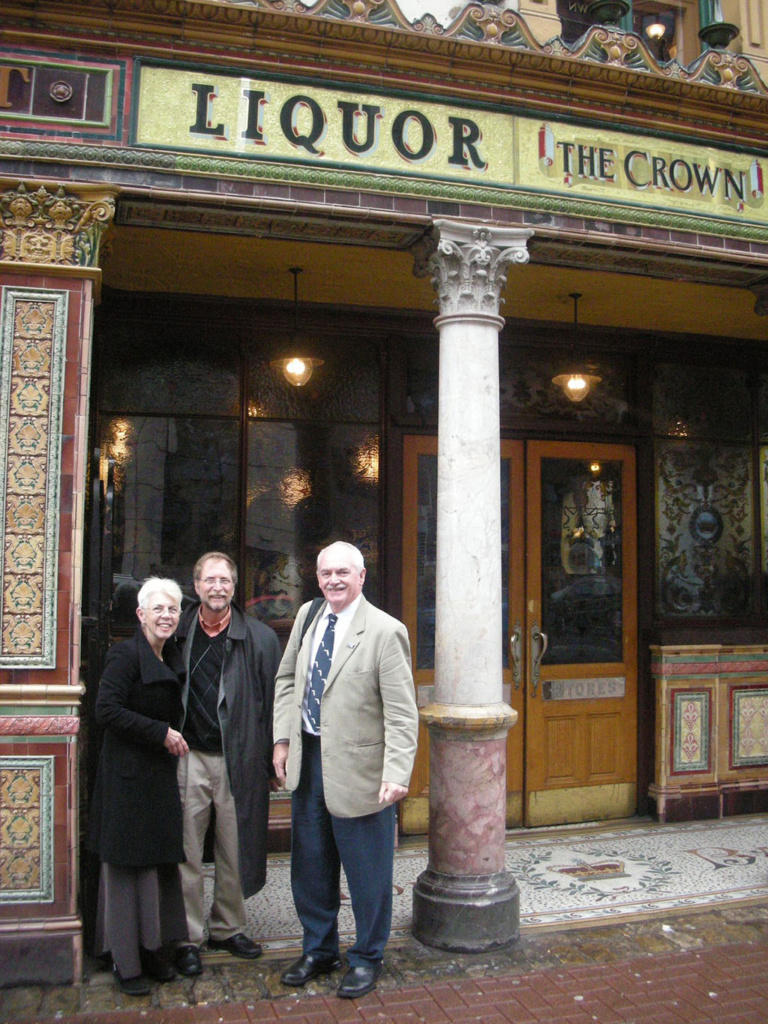
The walk from the pub to Great Victoria Street Station was about five to seven minutes. As I rushed along Great Victoria Street, regretting that I had an overabundance of beer taken, suddenly there was a gigantic explosion ahead in front of me. It was a very deep, threatening sound that shook me to the core. Almost in slow motion I heard screams, smoke appeared to erupt everywhere, fire and general bedlam surrounded me. I froze on the spot, feeling that I could not move. Standing alone for what seemed like an eternity, I checked my face, my hands and legs. I had survived, there was no blood, I was not maimed. But I was in a state of extreme shock. Seconds later, I felt uncontrollable tears fall across my cheeks, my body began to shake, feeling cold. I heard shouts behind me, “Get out of here, there might be another bomb’. Police and military vehicles quickly erupted on the scene. Their loud noises were creating even greater fear and bedlam. Police shouted at those of us still in the street, screaming at everyone to go indoors, and to get away from the scene.
Instinctively, I turned around slowly and walked quietly back into the republican bar I had left just minutes beforehand. Two security men were now positioned at the front door, they recognized me immediately, they recognized my Dublin accent. As I reentered the bar, the outside doors behind me were locked firmly. No-one was allowed leave. Colleagues of mine who were still in the bar, brought me glasses of Brandy and told me that I was in a safe haven. “No-one is coming in here. You are safe.”
BBC Northern Ireland television personnel were quick to dispatch camera crews to Great Victoria Street and the surrounding areas, where several other explosions had taken place that day. No-one could confirm the number of people injured, or if some people had been killed. My colleagues from Belfast reacted as if they had grown accustomed to these senseless acts of violence. Perhaps it was some form of survival mode. Was this I asked myself how they dealt with these recurring acts of violence in their hometown? Continuing their drinking, the bar patrons anxiously watched the latest developments on television. I admired their resilience, but I vowed that I could never live in such an environment.
I called my boss on a payphone from the pub. Peter lived in the comfortable, predominantly Unionist community near Bangor, County Down. “I know where you are”, he added, “I will pick you up in less than one hour. You need to get out of Belfast”
“We are going to the Bangor Ex-Services Club”, he told me as soon as I got inside his Rover. “Several of my old buddies from the RAF go there on Wednesdays. We can eat and have a drink, and listen to music”. I was in total survival mode now, determined to relieve my hunger, to drink more. Likewise, I knew that my plans to return to Dublin were suspended indefinitely. Without hesitation, Peter invited me to stay with his wife and family for several days.
Underneath several Union Jacks and a variety of British Armed Forces flags, I ate a fillet steak with fries, coupled with several glasses of wine. “You were very lucky,”, Peter added. “If you had been closer to Great Victoria’s railway station, who knows what might have happened”.
In the background, a trio of musicians were setting up their microphones and band equipment. As a small crowd gathered about us from the bar, I had this uncontrollable urge to sing a song. “Do you know the Elvis number, The Wonder of You?”
Afterwards, to the sounds of hand clapping, I sat down beside Peter. How ironic I thought that in the course of one horrific day, both Republicans and Loyalists in Northern Ireland should have that shared common bond – they both appreciated the music of Elvis Presley. What a crazy world.
September 1, 1971, turned out to be one of the most surreal days of my life.